
On the night before His crucifixion Jesus kept the Passover one last time with his disciples. In this blog I'd like to take some time to reflect on the significance of the Last Supper and its importance for our lives today. Most of us are aware that the Passover Festival is a God-given Festival that all Jews keep annually in order commemorate their deliverance from Egypt (Ex. 12:1-30). Being a Jew, Jesus habitually kept the Passover along with every other requirement of the Mosaic Law. However, as we will discover below Christ's Last Supper was a very special and significant occasion for God's people.
The Passover was a meal of remembrance
When Jesus shares this meal with His disciples, He is duty-bound, as a law-abiding Jew, to obey it. However, for Jesus, as He eats this meal, He is doing so with a view to what God is about to do, not just for the Jews, but for all God’s people. In the first Passover, each family was told to sacrifice a year-old male lamb or kid (goat), that was without defect and then its blood was to be placed on the lintel and doorposts of the house. The obedience of the Israelites to this instruction meant that the first-born in their families would be spared from the punishment that God would inflict on all who did not.
When the angel of death went through Egypt on that night, every first-born whose house was not protected in this way, was put to death; from the lowest servant in Egypt to the pharaoh’s own son. In the years that follow this event, the Jews celebrate the Passover meal as a meal of remembrance and people are commanded by God, through Moses that when they do this, they are to remember that God delivered them from Egypt with His mighty hand.
However, for Jesus, as He eats this meal, He is doing so with a view to what God is about to do...
The sacrificial system foreshadowed a greater sacrifice
Another important sacrifice involving lambs in the Jewish traditional worship was the daily sacrifice at the temple in Jerusalem. Every morning and evening, a lamb was sacrificed in the temple for the sins of the people.
The Levitical sacrificial system was based on people making a sacrifice for the sin that they had committed (or omitted). When Abraham was about to sacrifice Isaac, God provided him with a substitute to sacrifice instead of Isaac, because God saw that Abraham was willing to obey Him even in this. It is here that we first see God’s institution of a substitutional sacrifice for the life of a human being.
At this meal with His disciples, Jesus must have been acutely aware that the lambs that the Israelites sacrificed on that first Passover saved the Israelites from the punishment of death and that the lambs that they sacrificed on a daily basis, was a foreshadowing of something greater truth. With His death, God provides a way to remove all sins and so satisfy His just requirement that all who sin should perish.
Jesus was our Passover sacrifice
When Jesus is called the Lamb of God (Jn. 1:29) it refers to Him as the perfect and ultimate sacrifice for sin! Jesus, the one who is without sin, becomes the one who bears the sins of ALL the world! The Bible tells us that Jesus’s sacrifice was made once for all (Rom. 6:10) and that His blood would not only cover us from the penalty of death, but that we would receive the righteousness of God which is “given through faith in Jesus Christ to all who believe.” (Rom. 3:22). Jesus’ death would make all who believe in Him completely righteous and therefore would give to God a people who satisfy God’s requirement for relationship. God had to provide a way though Jesus to make this to happen.
A new meal of remembrance
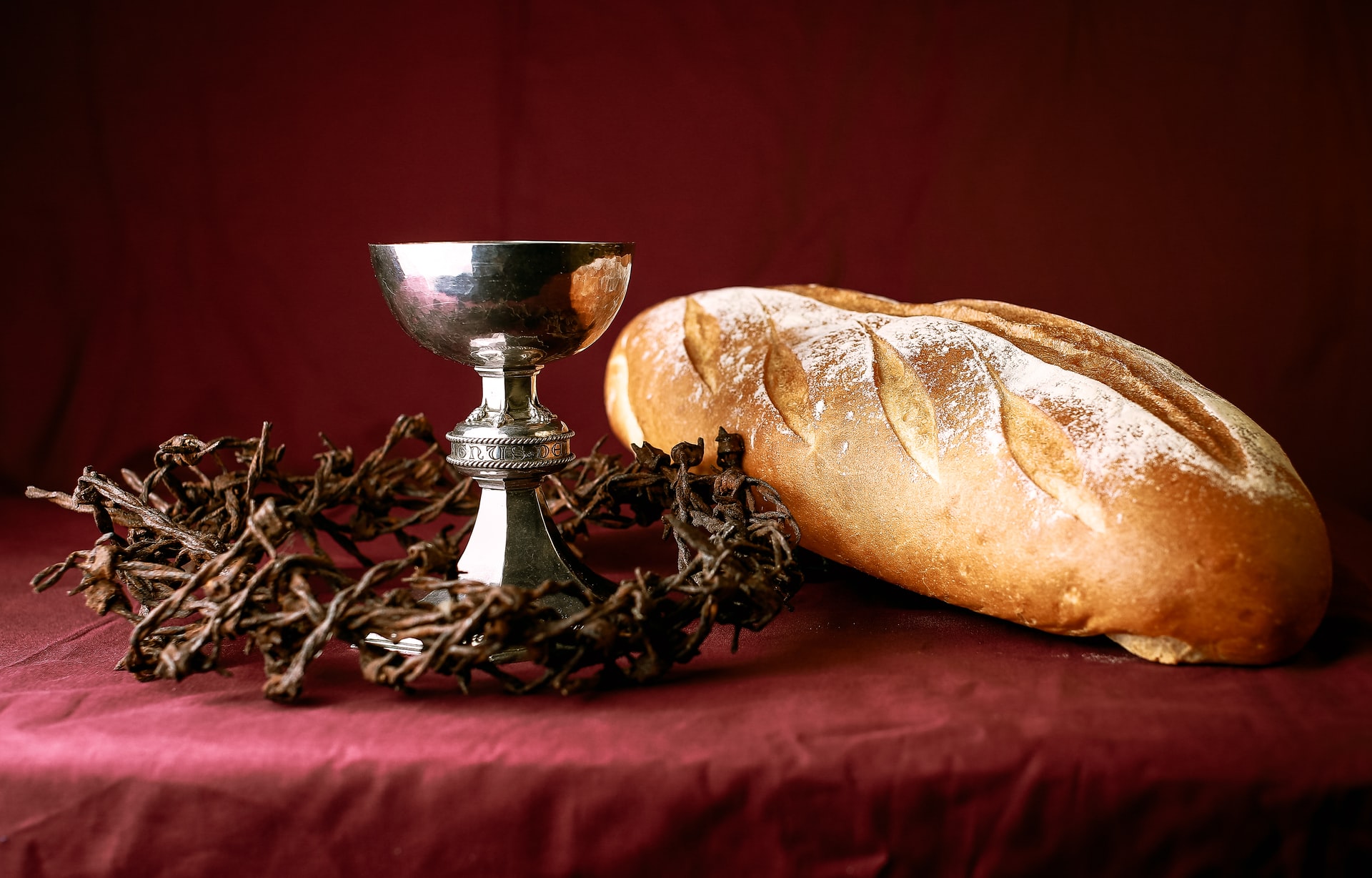
Jesus' death was the start a New Covenant with God’s people, one that is sealed with His broken body and the blood which He shed on the cross. It is Jesus’s foreknowledge of what is about to happen, that He uses to introduce a new meal of remembrance. He takes the bread and the cup, blesses it and tells the disciples to do this in remembrance of His death (and resurrection). His followers ought to do this, so that they would never forget that He was sacrificed so that their sins would be forgiven and that through His death, He secured for them God’s eternal life.
The Significance of the bread and the cup
The bread symbolized His body that was broken for us and the cup symbolized His blood that was shed for us (Lk. 22:19-20; 1 Cor. 11:23-26). This is what we are doing every time we share communion with fellow believers. We are celebrating our great salvation; greater than that the one that the Jews were called to remember at Passover. Our salvation was not just from a single event, but it is an eternal salvation from the greatest captivity that the world is subjected to.
Paul tells us that we all (all of humanity) have sinned and have fallen short of the glory of God (Rom. 3:23) and that the wages of sin (what is due to us as a reward) is death. (Rom. 6:23). All of humanity lives in slavery to sin, without any means to be bought out from it; to be redeemed. The Good News is that Jesus paid the price that was needed to set us free from sin. He paid the price that would buy our freedom from what we deserved. Our redemption is God’s free gift (given to ALL who believe that Jesus died to appease God’s righteous anger on their behalf).
The bread symbolized His body that was broken for us and the cup symbolized His blood that was shed for us.
An invitation to enter into relationship with God
As we join our brothers and sisters in Christ to worship God together this Easter weekend, let us remember the New Covenant which Jesus created between God and man. Let us remember that the sacrifice of Jesus has removed the curse of sin and given us eternal life with God (Jn. 17:3).
Perhaps you’re reading this blog today, but you don’t have a relationship with God. That intimate relationship can start today if you recognize that you have sinned (Rom 3:23) and your sin is separating you from Him (Rom 6:23). You cannot save yourself by being good or doing good (Eph. 2:8-9) because God requires you to be perfect (Matt. 5:48). However, the good news is that Jesus lived a perfect life on our behalf and died the death you deserved to die. Paul says that “even while we were sinners Christ died for us.”
He can be your perfect substitution and your Passover sacrifice if you would only believe in Him today. If you place your trust in Him alone, God promises to give you eternal life (Jn. 3:16).